
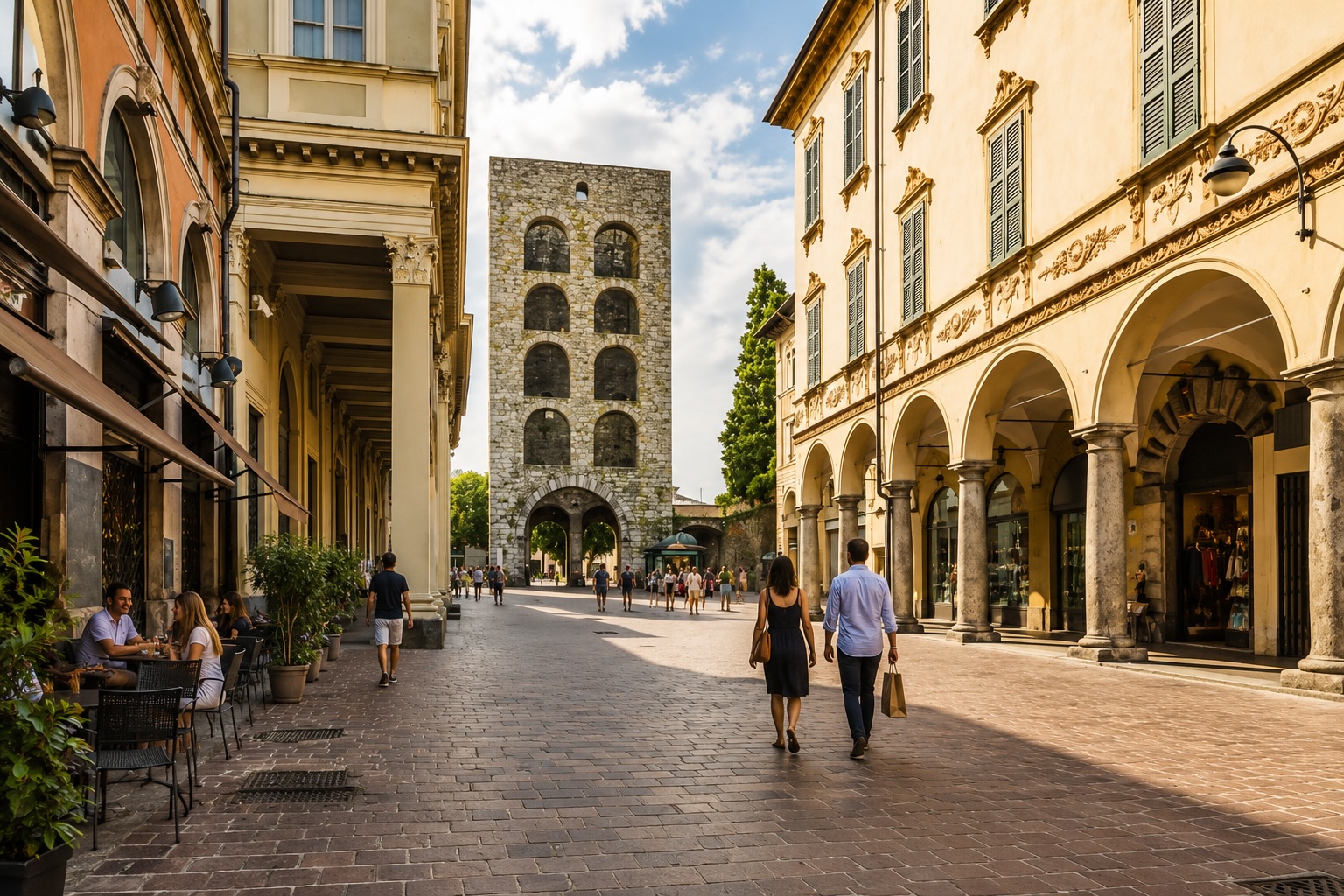
When evaluating a property, most buyers focus on factors such as size, condition, views, natural light, and energy efficiency. Yet there is another element that has become increasingly important in recent years: how easy it is to live without relying on a car. Known internationally as walkability, this concept measures how conveniently residents can reach everyday destinations on foot. In Como, walkability is becoming a significant factor influencing both property values and buyer preferences, particularly among international purchasers seeking a high-quality lifestyle.
Living within walking distance of restaurants, cafés, supermarkets, parks, schools, public transport, and the lakefront is no longer simply a convenience. For many buyers, it represents an investment in daily well-being. A neighborhood that allows residents to accomplish most daily activities on foot often enjoys stronger demand, greater resilience during market fluctuations, and better long-term value retention.
Why Walkability Matters More Than Ever
Lifestyle priorities have changed considerably over the past decade. Buyers increasingly value neighborhoods that reduce dependence on cars, encourage outdoor living, and make everyday routines simpler. The ability to leave home and comfortably walk to essential services has become a defining feature of desirable residential areas around the world.
This trend is especially evident among international buyers looking at Lake Como. Many purchase a second home not only for its beauty but also for the possibility of enjoying Italian life at a slower pace. Being able to stroll to a local café for breakfast, walk along the lake in the evening, shop at neighborhood boutiques, or reach a ferry terminal without driving significantly enhances the ownership experience.
Remote work has also reinforced this preference. Professionals who spend much of their day working from home increasingly appreciate neighborhoods where they can balance work with short walks, outdoor cafés, green spaces, and vibrant public areas without lengthy commutes.
The Most Walkable Areas in Como
Not every neighborhood offers the same level of walkability. Some areas naturally encourage walking thanks to their urban layout, historical development, and concentration of services.
Como’s historic center is the most obvious example. Its pedestrian streets, restaurants, boutiques, cultural attractions, and direct access to the lake create an environment where daily life can unfold almost entirely on foot. Properties in this area often command premium prices because of this unique combination of convenience and atmosphere.
Neighborhoods such as Borgo Vico also benefit from excellent walkability, offering easy access to both the city center and the lakefront while maintaining a more residential character. Areas close to the railway stations are equally attractive for buyers who frequently travel between Como, Milan, and Switzerland.
Cernobbio represents another highly desirable location. Although quieter than Como’s historic center, its elegant waterfront, local amenities, and charming streets allow residents to enjoy an active lifestyle with minimal dependence on a vehicle.
Brunate offers a different experience. While many services remain accessible locally, its hillside position makes walking more physically demanding. Nevertheless, the connection via the funicular provides convenient access to Como, making it attractive to buyers seeking panoramic views combined with proximity to the city.
How Walkability Influences Property Prices
Walkability contributes to property value in several ways. First, it broadens the pool of potential buyers. Families, retirees, young professionals, and international purchasers all appreciate neighborhoods where everyday needs can be met without driving.
Second, walkable locations tend to maintain stronger demand over time. Even during slower market periods, well-connected neighborhoods often experience greater stability because their convenience remains attractive regardless of changing economic conditions.
Third, highly walkable properties frequently generate stronger rental performance. Holiday guests often prioritize accommodations where they can explore the city without renting a car, while long-term tenants similarly value easy access to public transport, shops, and restaurants.
For investors, these factors can translate into lower vacancy rates and more consistent rental income over the long term.
Beyond Distance: The Quality of the Walking Experience
Walkability is not simply about measuring distances. The overall quality of the pedestrian environment also matters. Wide sidewalks, attractive public spaces, safe crossings, lighting, greenery, and pleasant streets all contribute to making walking enjoyable rather than merely possible.
Como benefits from a compact urban structure that naturally encourages walking. Its historic architecture, lakeside promenades, public squares, and human-scale streets create an environment where residents and visitors are encouraged to spend time outdoors. This intangible quality often strengthens emotional connections with a neighborhood, making it even more desirable for buyers.
An Increasingly Important Factor for International Buyers
International buyers frequently compare destinations across Europe before making a purchase. Many seek homes that offer not only architectural beauty but also a lifestyle centered on convenience, authenticity, and everyday enjoyment.
For these buyers, walkability often becomes a deciding factor. A property that allows owners to walk to restaurants, cultural attractions, marinas, shops, and transportation hubs provides an experience that extends well beyond the property itself. It transforms the surrounding neighborhood into part of the home’s overall value proposition.
As sustainability continues to influence urban planning and buyer expectations worldwide, neighborhoods designed around pedestrian accessibility are likely to become even more desirable in the years ahead.
For anyone considering buying property in Como, evaluating walkability alongside traditional criteria such as location, views, and architectural quality can provide a more complete understanding of a property’s long-term potential. In many cases, the ability to enjoy everyday life on foot becomes one of the features that owners value most after moving in, while also supporting stronger resale prospects in the future.